The MAONO PD100X combines USB plug-and-play convenience with an XLR output for a more developed recording setup. This review maono pd100x guide looks at how its voice-focused pickup, USB software controls, and connectivity options fit different creator workflows.
MAONO PD100X Review Summary
The quick verdict
1,000+ ratings
Read Amazon ReviewsMAONO PD100X
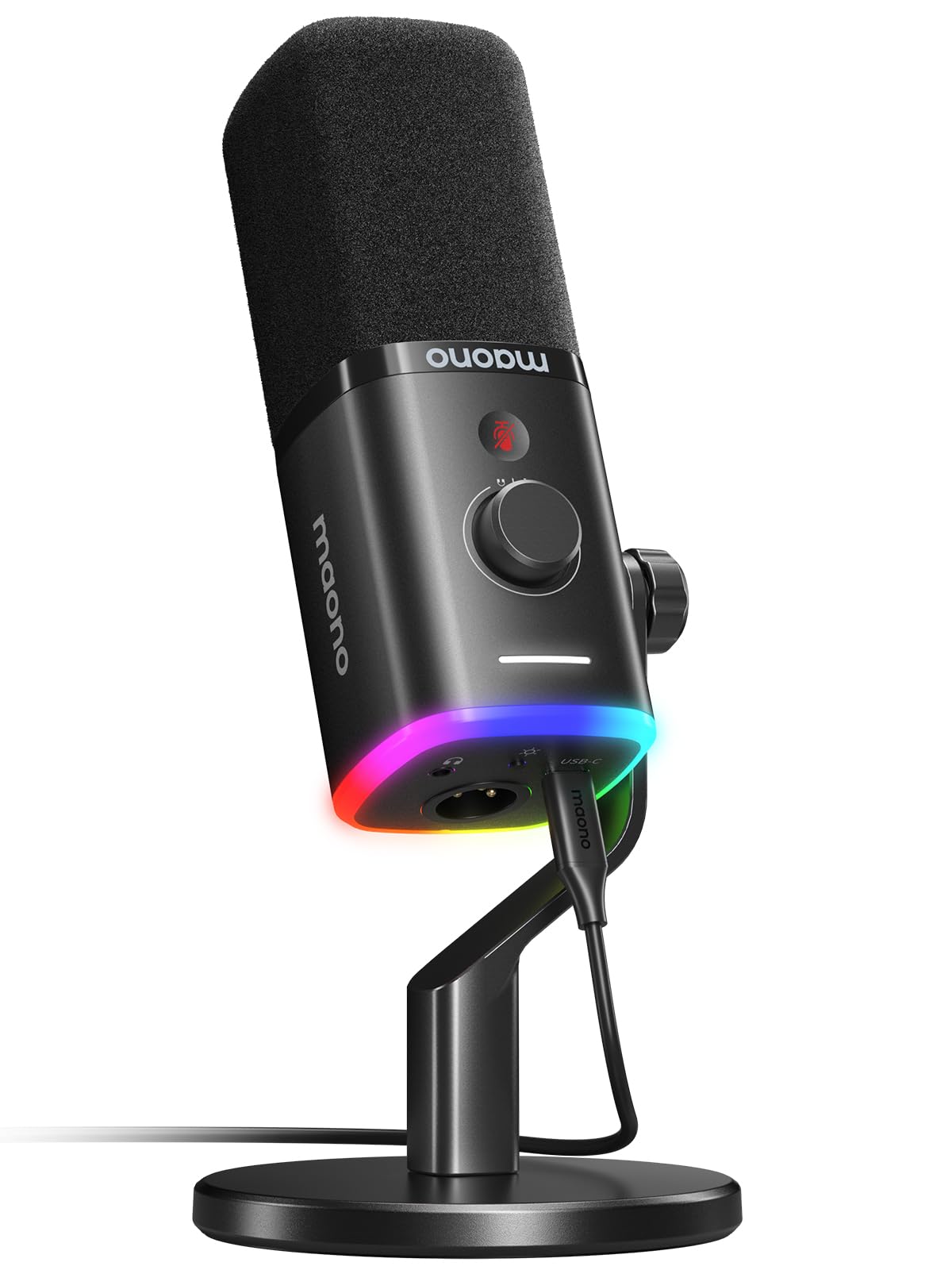
A practical fit for streamers and podcasters who want USB convenience, an XLR upgrade path, and onboard mute and monitoring controls.
- Dynamic microphone with a customized cardioid capsule and a 40Hz–16kHz frequency response.
- USB connection supports 24-bit/48kHz sampling and is described as plug and play for getting started.
- XLR output can connect to an audio interface or mixer; the XLR cable is sold separately.
- Tap-to-mute control and a combined knob for adjusting microphone gain and monitoring volume in USB mode.

Pros
- USB and XLR connectivity allow the mic to serve both a simple computer setup and a more involved audio chain.
- The dynamic capsule and cardioid pattern are designed with voice capture and ambient-noise rejection in mind.
Consider before buying
- Most convenience features, including the software controls and RGB, work only over USB.
- An XLR cable is not included, and the XLR workflow also requires an audio interface or mixer.
Read the full review summary
The PD100X is a dynamic microphone built around a cardioid capsule, with a stated 40Hz–16kHz frequency response and 24-bit/48kHz sampling over USB.
Its mix of USB and XLR makes it adaptable: new streamers can start with a direct computer connection, while users with an audio interface or mixer can use the XLR output as their setup grows.
Its strongest appeal is the combination of practical controls and adjustable USB features.
Tap-to-mute, a gain and monitoring knob, a headphone jack, RGB lighting, and software noise reduction make it a feature-rich desktop mic for gaming, streaming, and podcasting.
Buyers should keep in mind that these controls and software features are USB-only, and an XLR cable is not included.
The buying factors
MAONO PD100X Scorecard
Editorial scores reflect listed features and buyer fit; they are not laboratory measurements or customer ratings.
Connection flexibility
USB plug-and-play and XLR output cover both beginner and interface-based workflows.
Voice-focused design
The dynamic capsule and cardioid pattern are aimed at capturing a speaker in front of the mic while reducing ambient pickup.
USB controls
Tap-to-mute, gain and monitoring adjustment, and a headphone jack make common streaming tasks accessible at the mic.
Software customization
MaonoLink offers adjustable noise reduction and RGB settings over USB.
Setup readiness
USB is described as plug and play, while using XLR requires a separate cable and compatible interface or mixer.
Workflow consistency
The main controls, RGB, and software noise reduction are limited to USB mode, so switching to XLR changes the feature set.
Key Features and Specifications of MAONO PD100X
- Dynamic microphone with a customized cardioid capsule and a 40Hz–16kHz frequency response.
- USB connection supports 24-bit/48kHz sampling and is described as plug and play for getting started.
- XLR output can connect to an audio interface or mixer; the XLR cable is sold separately.
- Tap-to-mute control and a combined knob for adjusting microphone gain and monitoring volume in USB mode.
- Built-in headphone jack supports real-time monitoring over USB.
- MaonoLink software provides adjustable noise reduction and control of RGB color, brightness, and effects in USB mode.
Pros and Cons of MAONO PD100X
Pros
- USB and XLR connectivity allow the mic to serve both a simple computer setup and a more involved audio chain.
- The dynamic capsule and cardioid pattern are designed with voice capture and ambient-noise rejection in mind.
- Mute, gain, and headphone monitoring controls are available directly on the mic over USB.
- RGB lighting can be adjusted or turned off, giving users control over how prominent it looks at a desk.
Consider before buying
- Most convenience features, including the software controls and RGB, work only over USB.
- An XLR cable is not included, and the XLR workflow also requires an audio interface or mixer.
- Its listed 40Hz–16kHz frequency response is a defined range to consider if your recording needs depend on a different response profile.
Who Should Buy MAONO PD100X?
Good fit
Consider the PD100X if you want one dynamic mic for gaming, streaming, or podcasting and value a simple USB start with an XLR option for later.
The onboard mute and monitoring controls may be especially useful when you regularly switch between speaking, listening, and muting during a live session.
It also suits creators who like some control over their desktop setup. In USB mode, MaonoLink can adjust noise reduction and lighting, while the microphone’s controls handle gain and monitoring volume.
If you intend to use XLR, plan for the extra cable and compatible audio equipment, and check whether the USB-only functions matter to your workflow.
Who should skip it
Look elsewhere if you need the mic’s mute, monitoring, noise reduction, and lighting features to remain available through an XLR setup; those functions are specified for USB use.
This is not the simplest route if you want an XLR microphone ready to connect without buying additional gear. Confirm that you already have, or are willing to add, an interface or mixer and XLR cable.
How the MAONO PD100X Fits a Creator Setup
USB to start, XLR to expand
USB gives beginners a direct way to use the microphone with a computer, and the description presents it as plug and play.
XLR provides a path into an interface or mixer when a recording setup calls for that connection. Since the XLR cable is not included, buyers planning that route should factor it into setup preparation.
Voice pickup and the room
A dynamic capsule and cardioid pickup pattern are intended to focus on sound from in front of the microphone and reject some ambient noise. MaonoLink’s adjustable noise reduction adds another USB-side option for different environments.
These features may help in a typical gaming or home recording space, but they do not remove the need to consider mic placement and the sound around the desk.
Controls that matter live
A tap-to-mute control is convenient when you need to silence the mic quickly, and the combined knob adjusts gain and monitoring volume over USB. The built-in headphone jack also supports real-time listening.
Together, these controls put several common session adjustments within reach, though they are tied to the USB connection.
Sampling and sound-shaping expectations
The listed USB sampling rate is 24-bit/48kHz, and the frequency response is 40Hz–16kHz. Those specifications help define the microphone’s intended recording range, while MaonoLink adds noise-reduction adjustment.
Buyers who rely on a particular recording chain or sound-shaping process should check that the USB-only feature limits and stated range work with their planned setup.
Alternatives to MAONO PD100X
Instrument Dynamic Microphones alternative
1,000+ ratings
Read Amazon ReviewsMAONO PD100XS
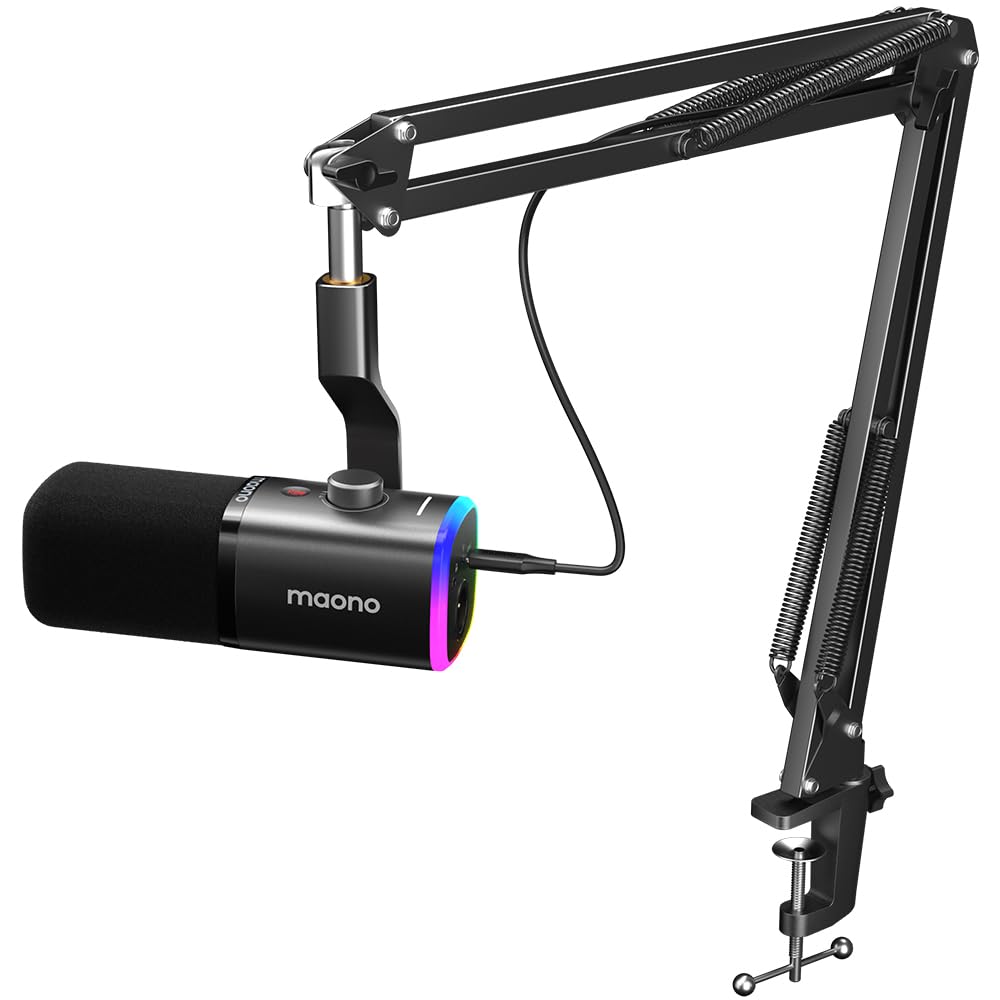
Choose the PD100X if its desktop setup suits your space. Consider the PD100XS if you prefer the supplied boom-arm configuration and want the listed console compatibility; both retain a similar USB/XLR workflow and USB-only controls.
- The PD100XS has a boom-arm setup and lists compatibility with PCs and PS4/PS5.
- Its USB/XLR connections, software noise reduction, RGB, mute, and monitoring controls are also limited to USB mode.
- The PD100X offers a desktop-oriented setup, USB/XLR connectivity, a dynamic cardioid capsule, and USB-only mute, monitoring, noise-reduction, and RGB controls.
Battery-focused alternative
800+ ratings
Read Amazon ReviewsMAONO PD200W
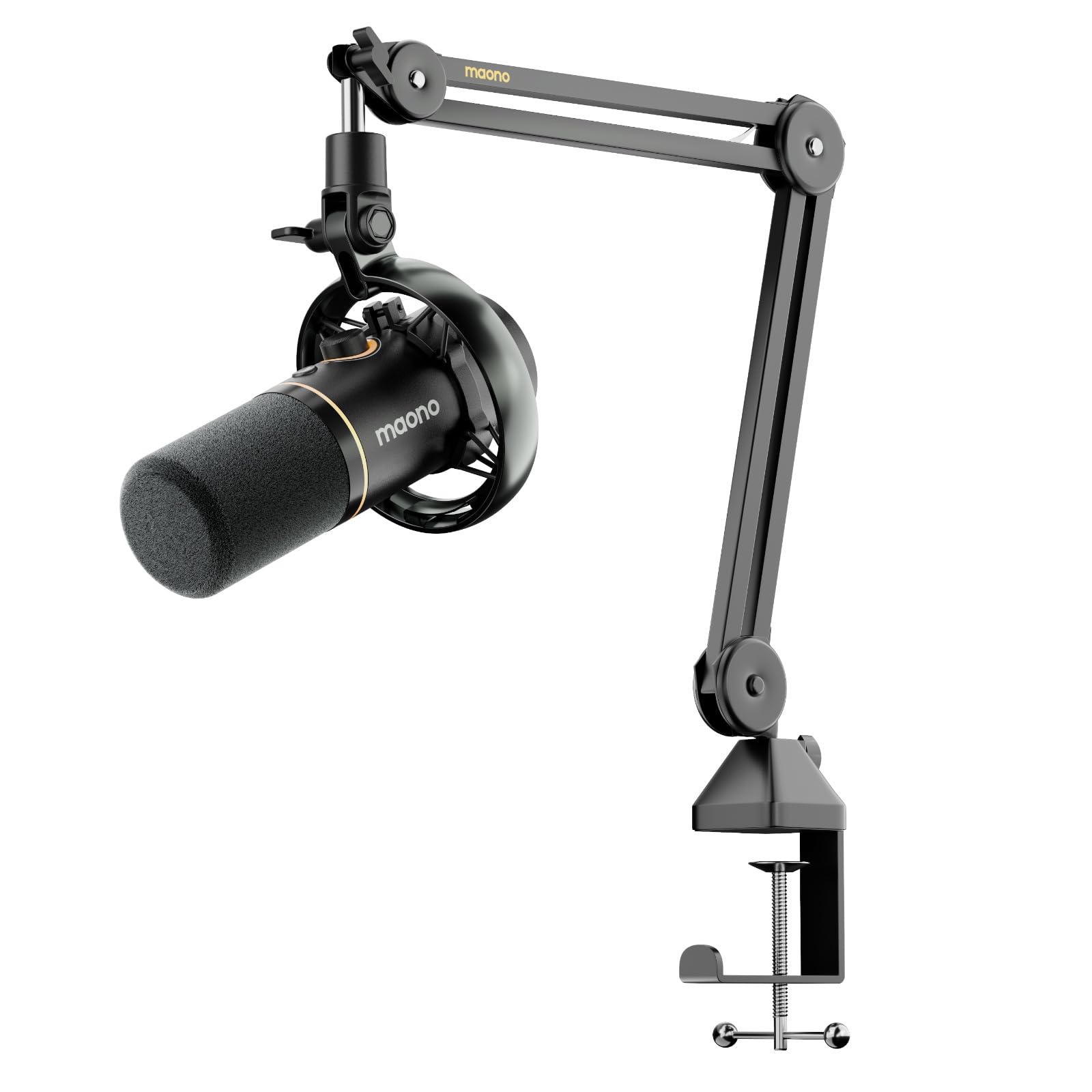
The PD100X is the more straightforward fit for a wired desktop workflow. Consider the PD200W if wireless movement or recording a two-mic conversation is central to your use, and you want its additional kit and features.
- The PD200W adds wireless operation alongside USB and XLR, includes a boom arm, and supports connecting two wireless microphones to one receiver for separate tracks.
- It also lists up to 60 hours of battery life with RGB off and up to 60m of wireless range.
- The PD100X is a wired dynamic mic with USB and XLR connections, USB-side software controls, and a desktop setup.
Is MAONO PD100X Worth It?
The MAONO PD100X is worth considering for streamers, gamers, and podcasters who want a dynamic voice mic with both easy USB setup and an XLR option.
Its mute and monitoring controls, headphone jack, adjustable USB noise reduction, and lighting add useful flexibility at a desk.
Buy it if USB will be your main connection or if you are prepared to add the cable and interface or mixer required for XLR.
Check the USB-only feature limits against your planned workflow before choosing it for a setup that depends on XLR.
Your review at a glance
1,000+ ratings
Read Amazon ReviewsMAONO PD100X
A practical fit for streamers and podcasters who want USB convenience, an XLR upgrade path, and onboard mute and monitoring controls.
- Dynamic microphone with a customized cardioid capsule and a 40Hz–16kHz frequency response.
- USB connection supports 24-bit/48kHz sampling and is described as plug and play for getting started.
- XLR output can connect to an audio interface or mixer; the XLR cable is sold separately.
- Tap-to-mute control and a combined knob for adjusting microphone gain and monitoring volume in USB mode.